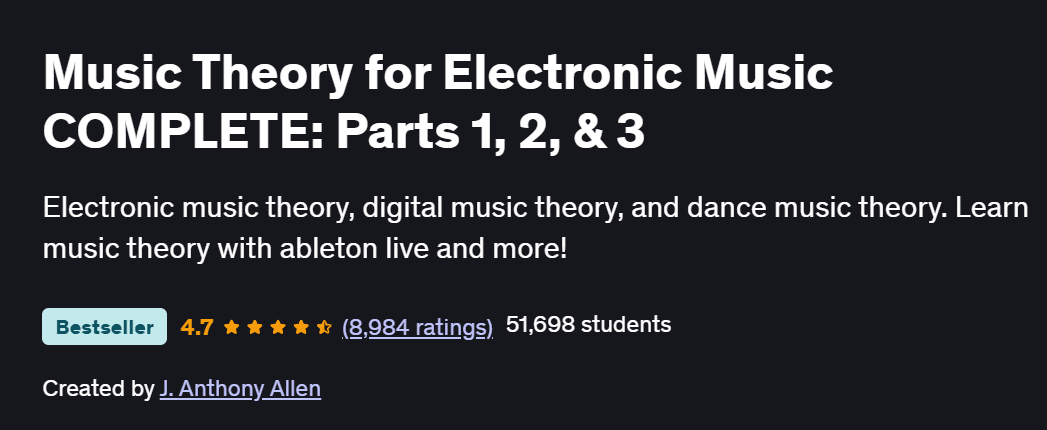
What will you in Music Theory for Electronic Music COMPLETE: Parts 1, 2, & 3 Course
-
Apply core music theory concepts (scales, chords, modes) specifically to electronic genres
-
Craft compelling basslines, melodies, and chord progressions for EDM, techno, and house
-
Understand rhythm, groove, and rhythmic subdivisions in electronic drum programming
-
Use tension and release, harmonic movement, modulation, and build/drop techniques
-
Translate theory into your DAW workflows for more inspired, theory-driven productions
Program Overview
Part 1: Foundations of Scales & Keys
⏳ 1 hour
-
Major, minor, and modal scales in an electronic context
-
Choosing key centers and understanding relative/parallel relationships
-
Mapping scales to MIDI keyboard and piano roll for quick sketching
Part 2: Chord Construction & Progressions
⏳ 1.5 hours
-
Building triads, seventh, and extended chords with inversion techniques
-
Designing progressions that groove in 4/4 and alternative time signatures
-
Voice-leading tips for smooth transitions and lush pad movement
Part 3: Melody & Bassline Techniques
⏳ 1 hour
-
Crafting memorable motifs, hooks, and counter-melodies
-
Syncopation and rhythmic variation for bass patterns
-
Layering sub, mid, and top basses with theory-driven interval choices
Part 4: Rhythm, Groove & Drum Theory
⏳ 1 hour
-
Understanding note subdivisions (16ths, triplets, swing) for hi-hat and percussion
-
Creating groove templates and humanizing MIDI for live feel
-
Polyrhythms and off-beat accents in modern electronic styles
Part 5: Tension, Release & Arrangement
⏳ 1 hour
-
Using suspension chords, secondary dominants, and modal interchange to build tension
-
Crafting build-ups, drops, and breakdowns with harmonic pivots
-
Song structure best practices for club and streaming formats
Part 6: Applying Theory in Your DAW
⏳ 1 hour
-
Quick chord/MIDI templates, scale quantize, and MIDI effects for fast workflow
-
Integrating theory concepts into Ableton Live, FL Studio, Logic Pro, etc.
-
Real-world project walkthrough: designing a complete track from theory up
Get certificate
Job Outlook
-
Electronic producers with strong theory foundations stand out in EDM, house, techno, and pop production
-
Skills valuable for roles as Music Producer, Sound Designer, and MIDI Programmer
-
Freelance opportunities composing for sync libraries, game audio, and sample pack creation
-
Theory-driven workflow accelerates creativity, collaboration, and professional growth in studios
Explore More Learning Paths
Deepen your understanding of music theory and elevate your electronic music production skills with these carefully selected courses, designed to help you create, arrange, and produce professional tracks.
Related Courses
-
Developing Your Musicianship Course – Strengthen your overall musicianship, including ear training, rhythm, and music theory essentials.
-
Music Theory for Electronic Musicians Part 1: Chords Course – Learn core chord structures and harmonies specifically for electronic music production.
-
Songwriting Simplified: Music Theory, Melody & Creativity Course – Apply music theory to crafting melodies and enhancing creativity in your electronic compositions.
Related Reading
-
What Is Performance Management? – Understand strategies for tracking progress and improving performance, essential for structured practice in music production.