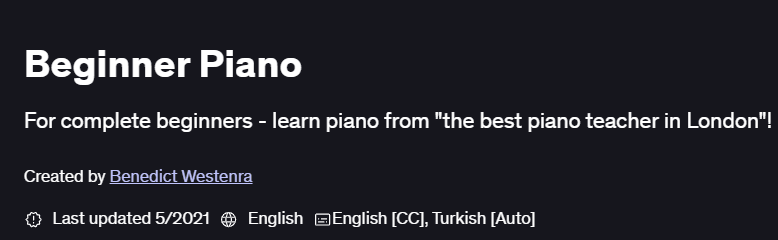
What will you learn in Beginner Piano Course
-
Play iconic riffs and melodies by ear—“Imagine” riff, Pachelbel’s “Canon,” “Billie Jean” bass line, “Amazing Grace,” “Happy Birthday,” and “When the Saints Go Marching In”
-
Develop solid hand positioning, timing, and coordination between both hands without first learning to read music
-
Master good practice habits: legato playing, phrasing, octave shifts, metronome use, and chord voicings
-
Understand fundamental piano concepts—finger numbers, “sound before sign” learning approach, and efficient technique
Program Overview
Module 1: Getting Started & Orientation
⏳ 10 minutes
-
Topics: Course philosophy (play before you read), sound-before-sign approach, setup for rapid progress
-
Hands-on: Follow instructor’s pacing drills and commit to daily practice routines
Module 2: Basic Technique & Hand Position
⏳ 15 minutes
-
Topics: Proper posture, hand and wrist alignment, white-key fingering patterns
-
Hands-on: Mirror-guided drills to develop relaxed, consistent touch
Module 3: Iconic Riffs & Melodies
⏳ 40 minutes
-
Topics: Breaking down riffs (Imagine, Billie Jean), melody extraction, rhythm locking
-
Hands-on: Play and memorize each riff hands together, focusing on groove accuracy
Module 4: Chords & Harmony Foundations
⏳ 20 minutes
-
Topics: Core chord shapes, major/minor triads, inversion basics
-
Hands-on: Integrate left-hand chord accompaniment under learned melodies
Module 5: Developing Legato & Phrasing
⏳ 15 minutes
-
Topics: Legato technique, dynamic shaping, musical phrasing tips
-
Hands-on: Apply legato drills to simple melodies and chord transitions
Module 6: Metronome & Timing Exercises
⏳ 10 minutes
-
Topics: Metronome use for steady pulse, subdividing beats, tempo control
-
Hands-on: Practice learned riffs and chords at varied tempos for precision
Module 7: Putting It All Together
⏳ 10 minutes
-
Topics: Combining riffs, chords, and legato into cohesive performances
-
Hands-on: Perform a mini “set” of three pieces in sequence, recording yourself for review
Get certificate
Job Outlook
-
Average U.S. Salary (Pianist/Musician): $30–$60 per hour for teaching and session work; orchestral positions offer salaried roles up to $50k–$70k annually
-
Global Opportunities: Gigging, teaching, and online content creation drive demand for versatile keyboard skills
-
Skills in Demand: Ability to play by ear, accompany singers/bands, and produce quick, polished performances
-
Career Paths: Private instructor, session musician, accompanist, worship leader, and content creator on digital platforms
Explore More Learning Paths
Take your piano skills to the next level with these carefully selected courses designed to help you progress from foundational techniques to advanced playing and creative performance.
Related Courses
-
Piano Techniques for Modern Music Course – Learn contemporary piano techniques to enhance your versatility and musical expression.
-
The Complete Piano Course: Master the Piano Course – Develop comprehensive piano skills from basics to advanced techniques for professional-quality playing.
-
Piano for Singer/Songwriters | Write Songs and Perform Live! Course – Combine piano mastery with songwriting and live performance skills to bring your music to life.
Related Reading
-
What Is Performance Management? – Discover how structured practice and skill assessment can help you track progress and improve your musical performance.