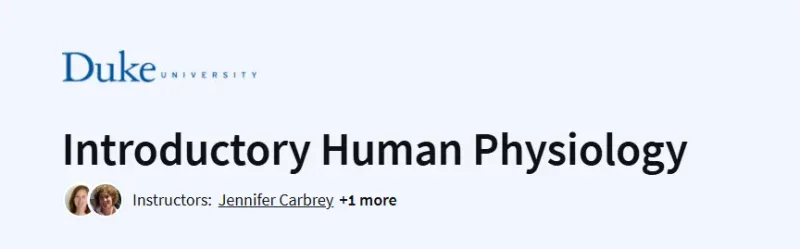
Introductory Human Physiology Course

Introductory Human Physiology Course Course

This course provides a thorough understanding of human physiology, making it ideal for students, healthcare professionals, and anyone interested in the biological sciences.

Explore This Course
9.8/10 Highly Recommended

Introductory Human Physiology Course on Coursera — This course provides a thorough understanding of human physiology, making it ideal for students, healthcare professionals, and anyone interested in the biological sciences.

Pros

  • Comprehensive coverage of human physiology.
  • Practical applications to real-life scenarios.
  • Free access with optional paid certificate.
  • Suitable for various learners, including students and professionals.
  • Engaging and well-organized course materials.

Cons

  • Some modules may require prior knowledge of basic biology.
  • Limited interactive elements; primarily video-based learning.
  • No formal certification upon completion without payment.

Introductory Human Physiology Course Course

Platform: Coursera

What you will learn in Introductory Human Physiology Course

  • Understand the basic concepts governing integrated body function.

  • Recognize how the body’s nine organ systems work together to maintain health.

  • Apply knowledge to real-life situations and medical conditions.

Program Overview

Introduction to Human Physiology

⏱️1 hours

  • Overview of the course structure and objectives.

  • Introduction to the fundamental concepts of human physiology.

Homeostasis and the Endocrine System

⏱️3 hours

  • Understanding the concept of homeostasis.

  • Exploration of the endocrine system and its role in maintaining internal balance.

The Nervous System

⏱️ 3 hours

  • Study of the nervous system’s structure and function.

  • Examination of how the nervous system controls and coordinates body activities.

The Muscular System

⏱️3 hours

  • Analysis of muscle types and their functions.

  • Understanding muscle contraction and movement.

The Cardiovascular System

⏱️ 3 hours

  • Exploration of the heart and blood vessels.

  • Study of blood circulation and its importance in transporting nutrients and oxygen.

The Respiratory System

⏱️ 3 hours

  • Understanding the mechanics of breathing.
  • Examination of gas exchange and its role in maintaining blood pH.

The Digestive System

⏱️ 3 hours

  • Study of the digestive tract and accessory organs.

  • Exploration of nutrient absorption and waste elimination processes.

The Urinary System

⏱️ 3 hours

  • Understanding kidney function and urine formation.

  • Examination of fluid and electrolyte balance.

The Reproductive System

⏱️ 3 hours

  • Study of male and female reproductive anatomy.

  • Exploration of reproductive processes and hormonal regulation.

The Immune System

⏱️ 3 hours

  • Understanding the body’s defense mechanisms.

  • Study of immune responses to pathogens.

Integration and Application

⏱️ 3 hours

  • Review of key concepts from all organ systems.

  • Application of knowledge to real-world scenarios and medical conditions.

Get certificate

Job Outlook

The demand for professionals with a strong understanding of human physiology is high in various fields, including healthcare, research, and education. Key skills include:

  • Knowledge of human body systems and their functions.

  • Ability to apply physiological concepts to real-life situations.

  • Strong analytical and problem-solving skills.
FAQs

Who can benefit from this course, and what's the value?
Ideal for students, healthcare professionals, or curious learners seeking a foundational grasp of how the body works. Great for MCAT prep, career refreshers, or building scientific literacy. Upon completion, you earn a shareable Coursera certificate from Duke University.
What do learners say (strengths & limitations)?
Exceptional average instructor ratings (around 4.7/5), highly praised for clarity and deliveryConsiderations: Some learners find the content dense or fast-paced at times
Which topics are covered in the course?
Learners explore nine major body systems through an engaging, integrated approach, covering: Homeostasis and the endocrine system Nervous system Muscular system Cardiovascular, respiratory, urinary systems Gastrointestinal, reproductive systems Sensors, senses, and more Plus a unique immersive VR experience to visualize human physiology in action
Do I need any prior science or anatomy background?
No prior experience is required. The course is designed for learners from all backgrounds. However, having a basic understanding of anatomy may make visualizing systems easier.
How long is the course, and how flexible is the schedule?
The course features 10 modules and is classified as Beginner level. Estimated completion time is around 3 weeks, assuming 10 hours per week—approximately 30 hours total. Fully self-paced, so you can tailor it to your schedule.

Similar Courses

Other courses in Health Science Courses