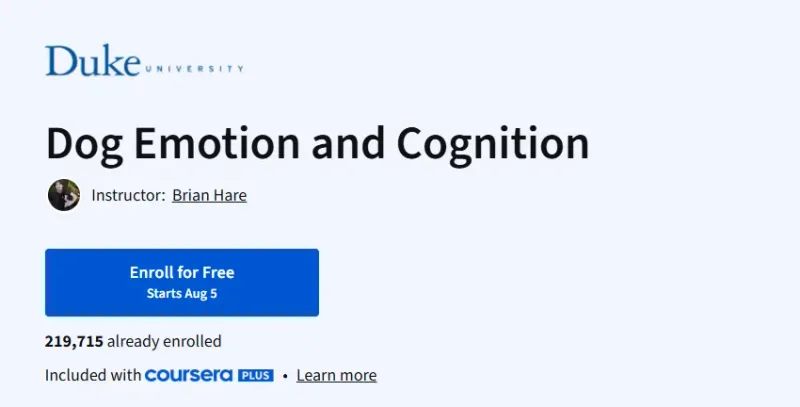
What will you learn in Dog Emotion and Cognition Course
-
Understand the emotional and cognitive capacities of dogs
-
Explore how dogs think, learn, and perceive the world
-
Study dog evolution and their relationship with humans
-
Apply scientific methods to evaluate canine behavior
-
Deepen your connection with your own dog using behavioral insights
Program Overview
Module 1: Introduction to Dog Cognition
⏳ 1 week
-
Topics: Overview of canine cognition, domestication theory
-
Hands-on: Reflective quiz on dog behavior patterns
Module 2: Evolution and Domestication
⏳ 1 week
-
Topics: Genetic evolution from wolves, domestication hypotheses
-
Hands-on: Compare behaviors of dogs and wild canids
Module 3: Seeing Through a Dog’s Eyes
⏳ 1 week
-
Topics: Visual, olfactory, and auditory perceptions
-
Hands-on: Observe and report sensory responses in your dog
Module 4: How Dogs Learn
⏳ 1 week
-
Topics: Conditioning, imitation, trial-and-error learning
-
Hands-on: Conduct a simple at-home learning test
Module 5: Emotion in Dogs
⏳ 1 week
-
Topics: Attachment theory, social behavior, emotional expression
-
Hands-on: Analyze emotional cues through video or real-life interactions
Module 6: Human-Dog Bond ⏳ 1 week
-
Topics: Social cognition, communication, cooperative behavior
-
Hands-on: Practice communication techniques with your own dog
Get certificate
Job Outlook
-
Useful for aspiring animal behaviorists, dog trainers, or veterinary professionals
-
Valuable for pet owners seeking deeper insight into their dog’s psychology
-
Adds strength to animal welfare, therapy, and canine training roles
-
Growing interest in companion animal psychology fuels related careers
Explore More Learning Paths
Deepen your understanding of emotions and cognition—both in animals and humans—through these courses that explore emotional intelligence and behavioral insights.
Related Courses
-
21-Day Crash Course in Emotional Intelligence Course – Develop core emotional intelligence skills to better understand and manage emotions in yourself and others.
-
Understanding and Developing Emotional Intelligence Course – Learn strategies to enhance emotional awareness, empathy, and interpersonal effectiveness.
Related Reading
-
What Is Management? – Explore how emotional intelligence contributes to effective management and leadership in professional settings.