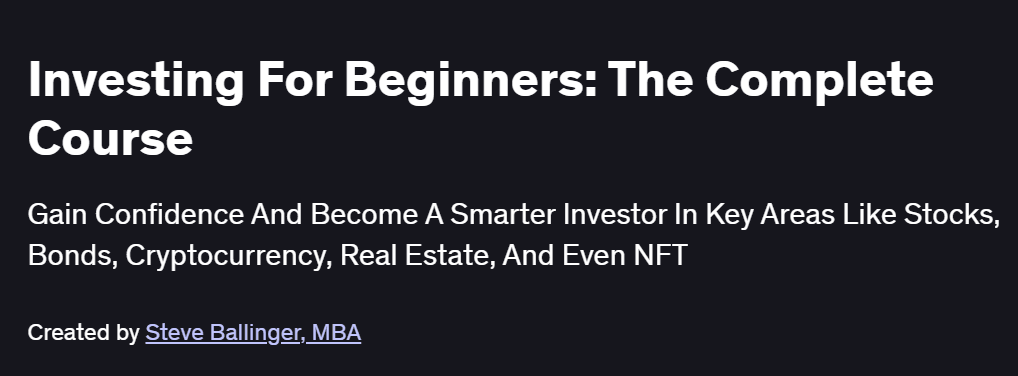
What will you in Investing For Beginners Course
- Understand the fundamentals of investing in stocks, bonds, and mutual funds.
- Learn about cryptocurrency and how to invest in it.
- Explore the world of NFTs and how to buy, sell, and create them.
- Develop strategies for building and managing a diversified investment portfolio.
- Gain insights into risk management and long-term financial planning.
Program Overview
Module 1: Introduction to Investing
⏳ 30 minutes
-
Overview of different investment vehicles.
-
Understanding risk and return.
-
The importance of diversification.
Module 2: Stock Market Investing
⏳ 1 hour
-
How to buy and sell stocks.
-
Fundamental and technical analysis basics.
-
Building a stock portfolio.
Module 3: Bonds and Mutual Funds
⏳ 45 minutes
-
Understanding bonds and their role in a portfolio.
-
What are mutual funds and ETFs?
-
Evaluating bond and mutual fund investments.
Module 4: Cryptocurrency Investing
⏳ 1 hour
-
Introduction to cryptocurrency and blockchain technology.
-
How to buy and store cryptocurrencies.
-
Evaluating the risks and rewards of crypto investments.
Module 5: NFTs and Digital Assets
⏳ 45 minutes
-
What are NFTs and how do they work?
-
Creating, buying, and selling NFTs.
-
Understanding the market for digital collectibles.
Module 6: Building a Diversified Portfolio
⏳ 45 minutes
-
Asset allocation strategies.
-
Balancing risk and return.
-
Rebalancing and monitoring your portfolio.
Get certificate
Job Outlook
-
Investors are highly sought after in sectors such as finance, tech, and real estate.
-
Entry-level investment analysts can earn between $50K and $80K annually.
-
With experience, roles such as portfolio manager or financial consultant offer higher earning potential.
Explore More Learning Paths
Strengthen your investing foundation with courses that help you understand long-term wealth creation, risk management, and portfolio-building strategies.
Related Courses
-
Securing Investment Returns in the Long Run Course – Learn proven strategies to build sustainable investment growth over long periods.
-
Investment Risk Management Course – Understand risk assessment, mitigation techniques, and decision-making frameworks for safer investing.
-
Investment and Portfolio Management Specialization Course – Master portfolio design, asset allocation, and performance evaluation for diversified investing.
Related Reading
Deepen your understanding of wealth-building fundamentals:
-
What Is Wealth Management? – Explore how structured financial planning helps grow and preserve long-term wealth.