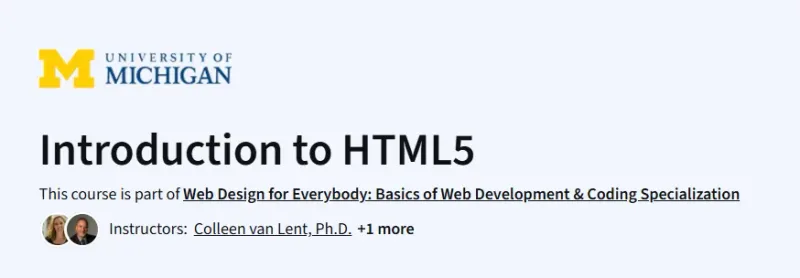
Introduction to HTML5 Course

Introduction to HTML5 Course Course

This course offers a strong foundation in HTML essentials. It’s well-paced, beginner-friendly, and ideal for anyone wanting to build or understand static websites.

Explore This Course Quick Enroll Page
9.7/10 Highly Recommended

Introduction to HTML5 Course on Coursera — This course offers a strong foundation in HTML essentials. It’s well-paced, beginner-friendly, and ideal for anyone wanting to build or understand static websites.

Pros

  • Simple, clear instruction aimed at HTML beginners
  • Hands-on tasks using real web editors
  • Teaches semantic HTML for better structure and accessibility

Cons

  • Limited depth on CSS or JavaScript concepts
  • No backend integration or dynamic webpage coverage

Introduction to HTML5 Course Course

Platform: Coursera

Instructor: University of Michigan

What will you learn in Introduction to HTML5 Course

  • Build and structure web pages using basic HTML tags and elements.

  • Understand document structure, forms, images, tables, and links.

​​​​​​​​​​

  • Apply semantic HTML for accessibility and SEO benefits.

  • Create and publish simple HTML pages using live online editors.

Program Overview

Module 1: HTML Basics
⌛ Duration: 1 week
Topics: HTML document structure, headings, paragraphs, lists, links
Hands-on: Create a basic webpage using headings, paragraphs, and links

Module 2: Formatting & Images
⌛ Duration: 1 week
Topics: Text formatting tags, alt text, embedding images
Hands-on: Insert formatted text and images into your HTML page

Module 3: Tables & Forms
⌛ Duration: 1 week
Topics: Table tags, form inputs, buttons, labels, submission
Hands-on: Build a registration form with various input types

Module 4: Semantic HTML & Accessibility
⌛ Duration: 1 week
Topics: HTML5 semantic elements (header, footer, nav), accessibility best practices
Hands-on: Update your webpage using semantic tags and verify accessibility

Get certificate

Job Outlook

  • Fundamental for any web developer or front-end designer role.

  • Valuable in fields like content design, digital marketing, and UX.

  • Jobs requiring HTML skills include Web Developer, Front-End Engineer, QA Tester.

  • Starting salaries range from ₹3 LPA (India) to $55K+ (US).

  • Supports freelance, website builder, and portfolio-building opportunities.

Explore More Learning Paths
Enhance your web development skills and create impressive, responsive websites with these carefully selected courses designed to strengthen your HTML and CSS expertise.

Related Courses

Related Reading

  • What Is Web Development? – Explore how web development works and the essential skills needed to create websites and web applications.

FAQs

Will I gain practical experience by creating real HTML web pages?
Build complete web pages with headings, paragraphs, images, links, tables, and forms. Apply semantic tags to improve structure and accessibility. Practice live coding in online editors without software installation. Receive feedback on hands-on exercises to refine skills. Prepares learners to independently create and publish static web pages.
How long will it take to complete the course and hands-on projects?
Four modules, each approximately 1 week long. Covers basics, formatting & images, tables & forms, semantic HTML & accessibility. Self-paced learning allows flexible schedules. Includes hands-on exercises for each module. Suitable for learners seeking structured, short-term web development training.
Can this course help me start a career in web development or front-end design?
Builds foundational skills for web developer or front-end engineer roles. Useful for UX designers, content creators, and QA testers. Supports freelance website building and portfolio creation. Enhances understanding of web structure for advanced web technologies. Prepares learners for further learning in CSS, JavaScript, and responsive design.
Will I learn to create accessible and SEO-friendly web pages?
Teaches semantic HTML elements like header, footer, nav, and section. Explains best practices for alt text and proper labeling of elements. Covers structuring content for improved SEO performance. Includes practical exercises to apply accessibility principles. Prepares learners to create web pages compliant with accessibility standards.
Do I need prior web development experience to take this course?
No prior experience required; beginner-friendly course. Covers HTML document structure, headings, paragraphs, lists, and links. Introduces semantic HTML for accessibility and SEO benefits. Includes hands-on practice with live web editors. Ideal for learners wanting to build static web pages or personal portfolios.

Similar Courses

Other courses in Computer Science Courses