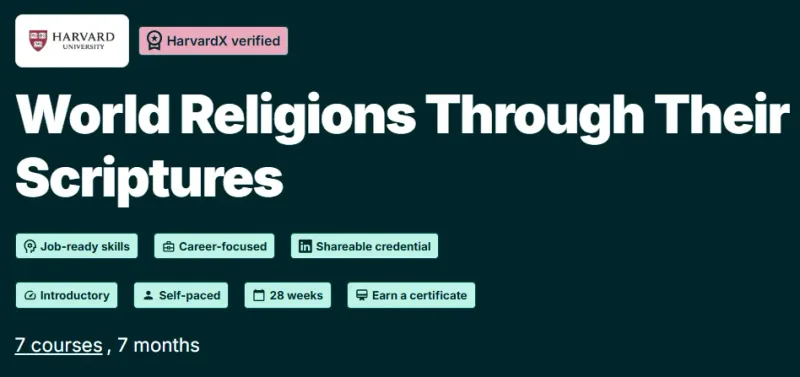
What will you learn in World Religions Through Their Scriptures course
- This XSeries program explores major world religions through close readings of their sacred scriptures.
- Learners will understand how religious texts shape belief systems, ethics, rituals, and cultural identity.
- The program emphasizes historical context, interpretive traditions, and comparative analysis.
- Students will study foundational scriptures from religions such as Christianity, Islam, Judaism, Hinduism, and Buddhism.
- Discussions highlight how sacred texts influence law, politics, art, and social structures globally.
- By completing the series, participants gain strong interfaith literacy and critical interpretive skills in religious studies.
Program Overview
Introduction to Scriptural Traditions
⏳ 4–6 Weeks
- Understand what constitutes sacred scripture.
- Explore methods of textual interpretation.
- Study historical transmission of religious texts.
- Analyze authority and canon formation.
Abrahamic Traditions
⏳ 4–6 Weeks
- Study selections from the Hebrew Bible and New Testament.
- Explore key teachings from the Qur’an.
- Understand theological and ethical themes.
- Analyze scriptural influence on law and society.
South and East Asian Traditions
⏳ 4–6 Weeks
- Examine Hindu scriptures such as the Vedas and Upanishads.
- Explore Buddhist sutras and philosophical teachings.
- Understand religious practice and cosmology.
- Analyze cultural transmission of sacred narratives.
Comparative and Contemporary Perspectives
⏳ 4–6 Weeks
- Compare interpretive approaches across religions.
- Study modern reinterpretations and reform movements.
- Explore interfaith dialogue and global impact.
- Develop critical reading and analytical writing skills.
Get certificate
Job Outlook
- While humanities-focused, this program strengthens analytical reasoning, cross-cultural understanding, and global awareness.
- Professionals in education, international relations, journalism, public policy, nonprofit leadership, and interfaith dialogue benefit from religious literacy.
- Cultural competency in global contexts enhances careers in diplomacy, consulting, and multicultural organizations.
- The program also prepares learners for graduate study in religious studies, theology, anthropology, and cultural history.