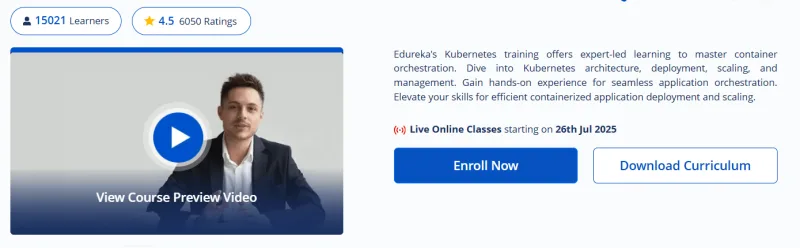
What will you learn in Kubernetes Certification Training Course: Administrator (CKA)
-
Master Kubernetes architecture, components, and core concepts for orchestration
-
Deploy, manage, and scale containerized applications across clusters
-
Create and configure Pods, Services, Deployments, and ReplicaSets
-
Use Helm for packaging, monitor clusters, and manage secrets/configurations
-
Prepare for the Certified Kubernetes Administrator (CKA) exam with hands-on labs
-
Implement real-time troubleshooting, logging, networking, and security in Kubernetes
Program Overview
Module 1: Introduction to Kubernetes
⏳ 1 week
-
Topics: Kubernetes architecture, master/slave components, kubectl basics
-
Hands-on: Install Minikube and deploy your first container on Kubernetes
Module 2: Pods, ReplicaSets & Deployments
⏳ 1.5 weeks
-
Topics: Pod lifecycle, labels/selectors, scaling apps, rolling updates
-
Hands-on: Create deployments and manage ReplicaSets with YAML files
Module 3: Services & Networking
⏳ 1.5 weeks
-
Topics: ClusterIP, NodePort, LoadBalancer, DNS, Ingress controllers
-
Hands-on: Expose applications and set up Ingress routing for services
Module 4: Storage & Volumes
⏳ 1 week
-
Topics: Volumes, Persistent Volumes (PV), Persistent Volume Claims (PVC), StatefulSets
-
Hands-on: Create stateful applications with attached persistent storage
Module 5: Configuration Management & Secrets
⏳ 1 week
-
Topics: ConfigMaps, Secrets, environment variables, resource quotas
-
Hands-on: Manage application configurations and sensitive data securely
Module 6: Helm & Logging
⏳ 1 week
-
Topics: Helm charts, Tiller, centralized logging with Fluentd and ELK stack
-
Hands-on: Deploy applications using Helm and monitor logs using Kibana
Module 7: Security & Role-Based Access Control (RBAC)
⏳ 1 week
-
Topics: Authentication, RBAC, service accounts, Pod Security Policies
-
Hands-on: Secure your cluster with RBAC rules and manage user permissions
Module 8: Troubleshooting & CKA Preparation
⏳ 1.5 weeks
-
Topics: Debugging, log analysis, crash loop investigation, resource errors
-
Hands-on: Solve real-time issues and practice exam-style scenarios
Get certificate
Job Outlook
-
Kubernetes expertise is highly demanded in DevOps, Cloud, and Site Reliability Engineering roles
-
Roles include Kubernetes Administrator, Cloud Engineer, DevOps Engineer, Platform Engineer
-
Average salaries range from $100,000 to $160,000+ for certified professionals
-
High demand in sectors like cloud computing, fintech, healthcare, and enterprise IT
Explore More Learning Paths
Expand your Kubernetes and cloud-native expertise with these carefully selected courses designed to strengthen your skills in container orchestration, deployment, and management.
Related Courses
-
Getting Started with Google Kubernetes Engine Course – Learn the fundamentals of Kubernetes on Google Cloud and gain hands-on experience deploying containerized applications.
-
Architecting with Google Kubernetes Engine Workloads Course – Master workload architecture, scaling, and management of Kubernetes clusters for real-world applications.
-
Architecting with Google Kubernetes Engine en Español Specialization Course – Deepen your Kubernetes skills with a Spanish-language specialization focusing on cluster architecture and best practices.
Related Reading
-
What Does a Data Engineer Do? – Discover the role of data engineers in managing complex systems, pipelines, and cloud-based workloads, which complements Kubernetes administration skills.