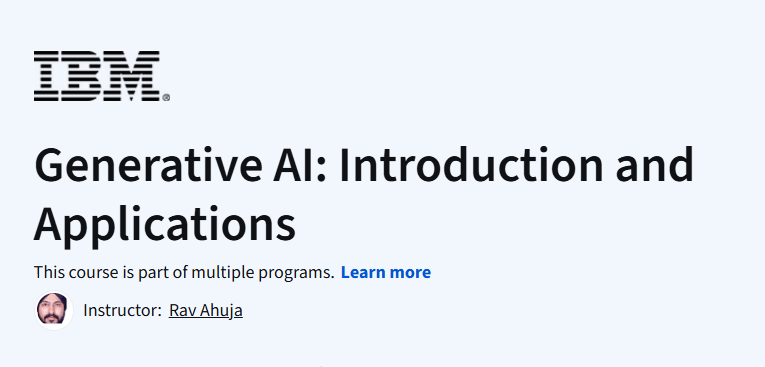
What will you learn in Generative AI: Introduction and Applications Course
-
Understand the fundamentals of generative AI and how it differs from traditional AI models
-
Explore real-world applications of generative AI in industries like design, healthcare, and business
-
Gain insights into tools such as large language models (LLMs), diffusion models, and image generators
-
Analyze the ethical considerations and responsible use of generative AI
-
Learn how to integrate generative AI into workflows to boost creativity and productivity
Program Overview
Module 1: Introduction to Generative AI
⏳ 1 week
-
Topics: What is Generative AI, comparison with traditional AI, history and breakthroughs
-
Hands-on: Identify common tools like ChatGPT, DALL·E, and Midjourney used in current applications
Module 2: Generative AI in Action
⏳ 1 week
-
Topics: Use cases in content creation, healthcare diagnostics, marketing, and more
-
Hands-on: Evaluate how companies apply generative AI to solve real-world problems
Module 3: Tools & Technologies
⏳ 1 week
-
Topics: LLMs, diffusion models, transformers, multimodal AI
-
Hands-on: Explore sample tools and platforms for generating text, images, and code
Module 4: Ethical Considerations & Responsible Use
⏳ 1 week
-
Topics: Deepfakes, misinformation, copyright concerns, bias in AI
-
Hands-on: Analyze scenarios to determine responsible AI usage practices
Module 5: The Future of Generative AI
⏳ 1 week
-
Topics: Evolving architectures, emerging tools, trends in creativity and automation
-
Hands-on: Predict how generative AI will shape industries and human work
Get certificate
Job Outlook
-
Generative AI is one of the fastest-growing tech fields, with rising demand across industries
-
Roles such as AI Product Manager, Prompt Engineer, and Applied Researcher are emerging
-
Upskilling in generative AI enhances career prospects in tech, design, marketing, and more
-
Professionals can leverage generative tools to become more efficient and creative at work
Explore More Learning Paths
Take your engineering and management expertise to the next level with these hand-picked programs designed to expand your skills and boost your leadership potential.
Related Courses
-
Generative AI for Everyone Course – Learn how generative AI works, its practical use cases, and how to apply it confidently across different industries.
-
Generative AI: Introduction and Applications Course – Build foundational knowledge of GenAI models and explore real-world applications to enhance productivity and innovation.
-
Introduction to Generative AI Learning Path Specialization Course – Master the essentials of GenAI technologies through a structured multi-course learning path designed for beginners and professionals alike.
Related Reading
-
What Is Project Management? – Understand the principles that make every great project a success story.