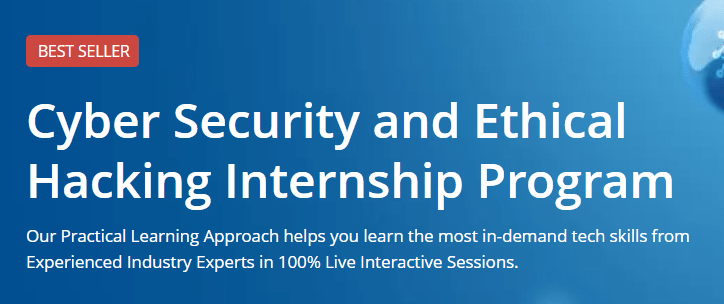
What will you learn in Cyber Security and Ethical Hacking Internship Program
-
Master Linux fundamentals, Kali tools, and core networking concepts to establish a secure foundation.
-
Conduct advanced reconnaissance, scanning, and enumeration techniques using Nmap, Netcat, and more.
-
Perform vulnerability analysis and exploit web applications with OWASP Top 10 attack methods including SQL injection and session hijacking.
-
Apply cryptography, access control, and secure coding practices to protect data and applications.
-
Complete an industry-grade capstone: ethically hack an Amazon-like e-commerce site and present your findings.
Program Overview
Module 1: Operating Systems & Networking Fundamentals
⏳ 12 hours
-
Topics: Linux fundamentals; Kali Linux tools; OS security; TCP/IP protocols
-
Hands-on: Secure user access management in Linux and network protocol analysis
Module 2: Cryptography & Application Security
⏳ 10 hours
-
Topics: Symmetric/asymmetric cryptography; hash functions; digital signatures; application security
-
Hands-on: Generate and verify hashes; perform source-code vulnerability analysis
Module 3: Cyber Security Tools & Reconnaissance
⏳ 14 hours
-
Topics: Ethical hacking methodologies; anonymity; information gathering; advanced network scanning and enumeration
-
Hands-on: Execute reconnaissance on target websites using Recon-ng, Maltego, and Nmap
Module 4: Web Application Hacking & OWASP Top 10
⏳ 16 hours
-
Topics: Web architectures; OWASP Top 10 vulnerabilities; SQL injection; session hijacking; social engineering
-
Hands-on: Capture The Flag challenge replicating real-world web attacks
Module 5: Vulnerability Analysis & Reporting
⏳ 8 hours
-
Topics: Vulnerability assessment lifecycle; risk scoring; reporting best practices
-
Hands-on: Scan for vulnerabilities with Nessus and Nikto; draft a professional pentest report
Module 6: Industry-Grade Capstone Project
⏳ 14 hours
-
Topics: End-to-end ethical hacking workflow; client presentation techniques; team collaboration
-
Hands-on: Ethically hack an Amazon-like e-commerce platform, remediate findings, and present results for peer review
Get certificate
Job Outlook
-
Security Analysts and Ethical Hackers command average salaries of $85k–$110k USD in the U.S. and ₹6–12 LPA in India
-
Demand for penetration testers and cybersecurity specialists grows 31% year-over-year, driven by rising cyber threats
-
Roles exist in finance, healthcare, government, and tech, with freelance consulting opportunities in vulnerability assessments
-
Mastery of hands-on hacking and reporting skills accelerates career progression to Senior Security Engineer and Security Architect
Explore More Learning Paths
Take your cybersecurity skills to the next level with these hand-picked programs designed to expand your technical expertise and prepare you for real-world security challenges.
Related Courses
-
Introduction to Cyber Security Specialization Course – Build foundational cybersecurity knowledge and understand key concepts in protecting digital assets.
-
Cybersecurity for Business Specialization Course – Learn practical strategies to secure business environments and mitigate cyber threats effectively.
-
Automate Cybersecurity Tasks with Python Course – Gain hands-on experience automating security workflows using Python, improving efficiency and response times.
Related Reading
-
What Is Data Management? – Explore how structured data management practices strengthen cybersecurity measures and support secure operations.