9.7/10
Highly Recommended
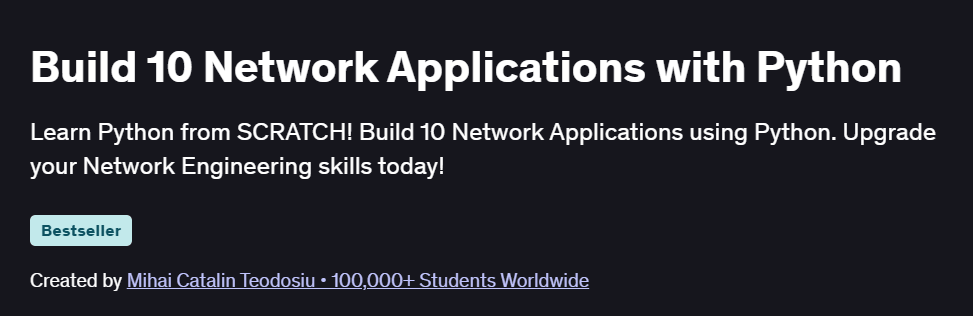
Build 10 Network Applications with Python Course on Udemy — This course delivers real-life network applications alongside Python fundamentals. The project-based approach and use of network emulators are especially valuable for engineers building practical scripts. Best suited for learners with basic networking knowledge; those seeking deeper automation frameworks (e.g. Ansible, advanced libraries) should supplement.
Pros
- Build 10 functional network tools relevant to real engineering tasks.
- Learn-by-doing style with quizzes, cheat sheet, and code examples.
- Uses network emulation for real test environments.
Cons
- Limited to network tool scripts; lacks formal framework use (e.g. Ansible, Napalm).
- Less emphasis on advanced Python automation libraries or CI/CD practices.
Build 10 Network Applications with Python Course Course
Platform: Udemy
What will you learn in Build 10 Network Applications with Python Course
-
Learn Python fundamentals and apply them directly to network automation use cases.
-
Develop ten real-world network tools—SSH config readers, subnet calculators, SNMP/LLDP monitors, rogue DHCP detectors, NMAP scripts, packet sniffers, and more.
-
Work with networking protocols like TCP/UDP, SSH, SNMP, and device discovery using Python.
-
Use libraries such as Paramiko, Netmiko (where applicable), and integrate networking tools via GNS3 or VirtualBox emulation.
Program Overview
Module: Build 10 Network Applications with Python
⏳ ~15 hours
-
Topics:
-
Python basics (variables, data types, loops, functions, exceptions, file operations, regex, classes)
-
Networking tools development: SSH configuration readers, subnet calculators, graphing network stats, packet sniffers, SNMPv3 readers, NMAP tool, LLDP monitor, rogue DHCP detectors, email notifications, OSPF discovery
-
Hands-on: Step-by-step walkthroughs for each application; quizzes after theory lessons; downloadable working files, cheat sheet, and PDF e‑book; usage of network emulators (Arista vEOS, VirtualBox/GNS3) to test tools in realistic environments.
Job Outlook
-
Relevant Roles: Network Engineer, Network Automation Engineer, DevOps Engineer, Systems Administrator
-
Skill Impact: Build real-world automation tools, reduce manual intervention, and support infrastructure management using Python scripts
-
Industry Demand: High demand in enterprise networking, cloud infrastructure, and operations teams seeking automation with Python and device APIs
-
Career Growth: Leverages both Python development and network systems knowledge for roles like Automation Engineer or Site Reliability Engineer
-
Freelancing Potential: Useful for custom network audit tools, automation scripts, or consultancy in network toolchain development
FAQs
Do I need prior programming or networking experience to take this course?
Beginner-friendly Python fundamentals included. Basic networking knowledge recommended for context. Covers Python variables, loops, functions, exceptions, and file operations. Hands-on practice building SSH readers, subnet calculators, and packet sniffers. Ideal for learners aiming for practical network automation skills.
How practical is this course for real-world network automation?
Build 10 real network tools (SSH readers, subnet calculators, NMAP scripts, SNMP monitors, and more). Use Python libraries such as Paramiko and Netmiko. Test tools using network emulators (GNS3, VirtualBox, Arista vEOS). Apply knowledge to monitoring, automation, and auditing tasks. Hands-on labs include downloadable files, cheat sheets, and step-by-step walkthroughs.
What career roles can this course prepare me for?
Prepares for Network Engineer, Network Automation Engineer, and DevOps roles. Supports Systems Administrator and Site Reliability Engineer positions. Build portfolio-ready Python automation scripts. Skills applicable in enterprise networking, cloud infrastructure, and operations. Freelance opportunities for custom automation scripts or consultancy.
Does the course include a capstone or project?
No single capstone project; learning occurs through building 10 tools. Each tool includes step-by-step coding exercises and testing in emulated environments. Reinforces Python and networking concepts incrementally. Allows learners to showcase a mini portfolio of functional network applications. Encourages applying skills in real-world IT environments.
How long does it realistically take to complete this course?
Total duration: ~15 hours across one main module. Includes lectures, step-by-step labs, quizzes, and downloadable resources. Flexible pacing allows completion alongside work or other courses. Hands-on exercises may require additional time to practice and test tools. Most learners complete it in 1–2 weeks with consistent effort.