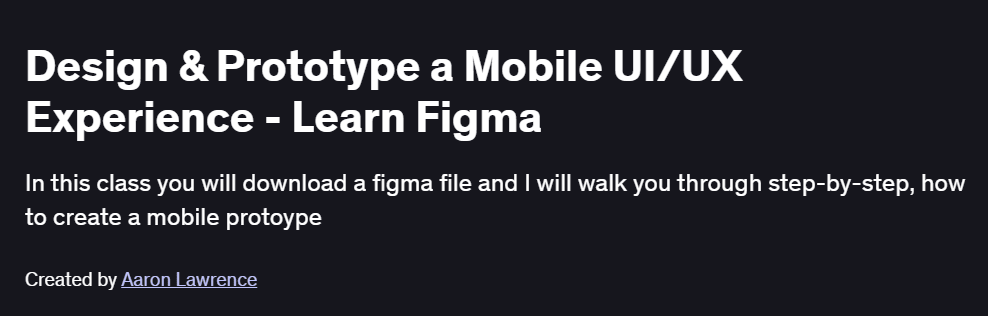
What will you learn in Design & Prototype a Mobile UI/UX Experience – Learn Figma Course
-
Understand mobile UI/UX principles: touch targets, navigation patterns, and platform guidelines
-
Build interactive prototypes with Figma’s Auto Layout, Variants, and Smart Animate
-
Conduct user flows and wireframing to validate information architecture and interactions
-
Collaborate effectively: versioning, comments, and developer handoff with Inspect and Export features
-
Test and iterate prototypes on real devices using Figma Mirror and user-feedback integrations
Program Overview
Module 1: Foundations of Mobile UX
⏳ 45 minutes
-
Topics: Mobile interaction patterns, platform conventions (iOS vs. Android), touch ergonomics
-
Hands-on: Sketch low-fidelity wireframes for a simple onboarding flow
Module 2: Getting Started with Figma
⏳ 1 hour
-
Topics: Figma UI overview, frames vs. groups, asset management, plugins
-
Hands-on: Set up your first mobile file with device presets and import assets
Module 3: Layout & Auto Layout Basics
⏳ 1 hour
-
Topics: Auto Layout principles, padding/margin controls, responsive resizing
-
Hands-on: Build a responsive card list component that adjusts to varying content lengths
Module 4: Components, Variants & Design Systems
⏳ 1.5 hours
-
Topics: Creating reusable components, defining Variants for states, publishing libraries
-
Hands-on: Develop a button component with Default, Hover, Pressed, and Disabled states
Module 5: Prototyping Interactions
⏳ 1 hour
-
Topics: Link between frames, overlay modals, Smart Animate for micro-interactions
-
Hands-on: Prototype a bottom-sheet menu and transition it with easing curves
Module 6: User Flows & Information Architecture
⏳ 1 hour
-
Topics: Mapping flows, branching scenarios, usability heuristics
-
Hands-on: Create a flow chart for onboarding, then link your wireframes into a clickable prototype
Module 7: Collaboration & Feedback
⏳ 45 minutes
-
Topics: Commenting, version history, shared libraries, handoff with Inspect panel
-
Hands-on: Invite a peer to review, respond to feedback, and generate spec exports for developers
Module 8: Testing & Iteration with Figma Mirror
⏳ 45 minutes
-
Topics: Mobile preview, usability testing integrations, gathering user feedback
-
Hands-on: Test your prototype on a smartphone via Figma Mirror and iterate based on observations
Module 9: Final Project – End-to-End Mobile App Prototype
⏳ 2 hours
-
Topics: Combining wireframes, visual design, and interactions into a cohesive app experience
-
Hands-on: Design and prototype a mini task-management app with at least five screens and interactive flows
Get certificate
Job Outlook
-
UI/UX designers proficient in Figma are in high demand for roles like Mobile App Designer, Product Designer, and Interaction Designer
-
Salaries range from $70,000 to $110,000+ depending on experience and region
-
Expertise in rapid prototyping accelerates hiring in startups, agencies, and in-house product teams
-
Strong Figma skills facilitate collaboration with developers and product managers, boosting project success
Explore More Learning Paths
Enhance your UI/UX design skills and create intuitive mobile experiences with these carefully selected courses designed to take your design projects from concept to prototype.
Related Courses
-
UI/UX Design Certification Course – Learn the fundamentals of UI/UX design, including wireframing, user research, and prototyping.
-
UI/UX Design Specialization Course – Gain hands-on experience in designing engaging user interfaces and seamless user experiences.
-
IBM UI/UX Designer Professional Certificate Course – Build a professional UI/UX portfolio and develop skills sought by top tech companies.
Related Reading
-
What Is Product Management? – Learn how product management principles can help you align UI/UX design with project goals, user needs, and business objectives.