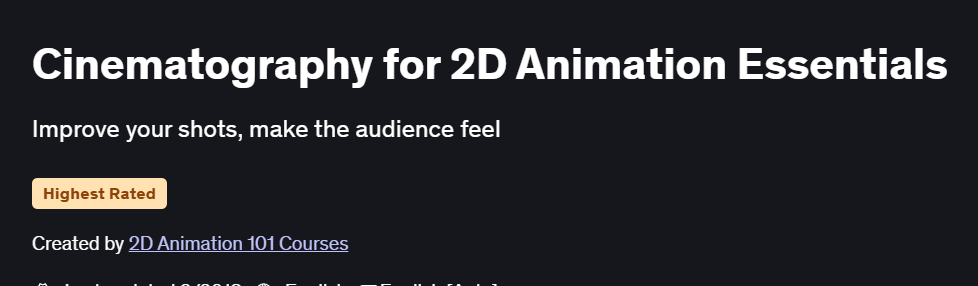
Cinematography for 2D Animation Essentials Course

Cinematography for 2D Animation Essentials Course Course

This course delivers a focused introduction to cinematography techniques tailored for 2D animation.

Explore This Course
9.6/10 Highly Recommended

Cinematography for 2D Animation Essentials Course on Udemy — This course delivers a focused introduction to cinematography techniques tailored for 2D animation.

Pros

  • Succinct modules that respect busy schedules
  • Hands-on practice with real shot breakdowns
  • Direct application of film principles to animation

Cons

  • Limited depth for advanced cinematography theory
  • No downloadable project files for guided practice

Cinematography for 2D Animation Essentials Course Course

Platform: Udemy

What will you learn in Cinematography for 2D Animation Essentials Course

  • Define the fundamentals of camera work to enhance 2D animation storytelling

  • Apply static camera techniques to frame your scenes effectively

  • Utilize moving-camera methods to add dynamism and guide viewer focus

​​​​​​​​​​

  • Plan shot sequences that support narrative flow and character action

  • Integrate cinematography principles into your animation pipeline for polished results

Program Overview

Module 1: Introduction to Cinematography Essentials

⏳ 3 minutes

  • Topics: Course roadmap; overview of cinematography for 2D animation

  • Hands-on: Navigate the course and review sample shot breakdowns

Module 2: Static Camera Techniques

⏳ 10 minutes

  • Topics: Framing, composition rules, use of depth and layering

  • Hands-on: Analyze and recreate three static shot examples

Module 3: Moving Camera Techniques

⏳ 15 minutes

  • Topics: Pans, tilts, tracking shots, and camera transitions

  • Hands-on: Plan and animate two short camera-move sequences

Get certificate

Job Outlook

  • Median annual wage for special effects artists and animators: $99,800 (May 2024)

  • Employment projected to grow 4% from 2023 to 2033, as fast as average for all occupations

  • Skills applicable to 2D animation studios, game development teams, and freelance animation projects

  • Cinematography expertise enhances roles like animation director, storyboard artist, and scene planner

Explore More Learning Paths

Take your creative and visual storytelling expertise to the next level with these hand-picked programs designed to elevate your animation, cinematography, and video production skills.

Related Courses

Related Reading

Gain deeper insight into how structured creative workflows improve production quality:

  • What Is Time Management? – Learn how effective time planning helps you manage creative processes, meet deadlines, and boost productivity in animation and filmmaking.
FAQs

How is cinematography adapted for 2D animation versus live-action filmmaking?
In 2D animation, there is no physical camera — every shot is “drawn” or composited, so cinematographic choices must be premeditated and planned. You’ll learn to simulate camera techniques (zoom, pan, tilt, dolly) through layering, transforms, and motion rigs. The course will explain how certain “camera moves” are harder (or impossible) in 2D, so you’ll pick only those that make narrative sense. Framing, composition, and rule of thirds still apply, but you must think in terms of flat planes and parallax layering. The course emphasizes storytelling intent: the cinematography must serve character, emotion, and pacing, not just “show off” camera moves.
Do I need to be an experienced animator before taking this course?
The course is marked as beginner level in cinematography. Basic understanding of 2D drawing or animation helps, but it's not strictly required. You’ll be guided through camera and shot concepts from scratch. The curriculum uses simple scenes and diagrams before moving to complex ones, so you grow gradually. You can pair this course with a basic animation course to get the best results.
How does this course teach camera movement in a 2D space (e.g. parallax, push/pull, panning)?
You’ll be introduced to static camera first — framing without movement — as the foundation. Then, concepts of moving the camera like panning, tilting, push & pull (dolly effect) are covered. Parallax layers (foreground, midground, background) are taught so that movement gives illusion of depth. The course shows three versions of the same scene: amateur, intermediate, and “best”— so you see how camera moves evolve. You’ll get practice applying those moves in 2D scenes — combining layering, timing, and easing of motion.
What storytelling benefits does cinematography bring to 2D animation?
Cinematography helps control the viewer’s focus—what to look at, when, and why. It can enhance emotional tone — for example, tight close-ups for tension, wide shots for isolation, etc. You can use shot choices to reinforce character relationships (e.g. over-the-shoulder, points-of-view). Camera movement can drive pacing and transitions between beats or scenes. It also adds depth and visual interest, making static 2D scenes feel more cinematic and layered.
How much time will I need to practice these techniques to see improvement in my animations?
The core video content is compact (about 30 minutes) in its description, but real learning comes from practice. To internalize framing, try redoing your past animations with alternate camera angles and moves. Spend time breaking down scenes from films and analyzing shot composition, then mimic them in your 2D environment. You should budget several hours per week to experiment with layering, camera rigs, and compositing moves. With consistent practice over a few weeks, you’ll begin seeing more dynamic, coherent shots in your work.

Similar Courses

Other courses in Design Courses