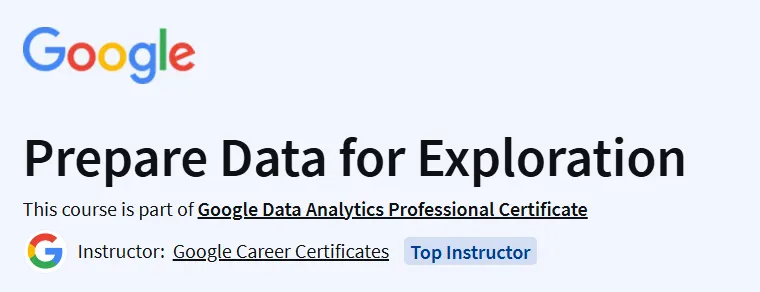
Prepare Data for Exploration Course

Prepare Data for Exploration Course Course

The "Prepare Data for Exploration" course offers a comprehensive introduction to the foundational aspects of data preparation. It's particularly beneficial for beginners and professionals seeking to u...

Explore This Course
9.8/10 Highly Recommended

Prepare Data for Exploration Course on Coursera — The "Prepare Data for Exploration" course offers a comprehensive introduction to the foundational aspects of data preparation. It's particularly beneficial for beginners and professionals seeking to understand the critical steps in data collection and organization.

Pros

  • Beginner-friendly with no prior experience required.
  • Taught by experienced instructors from Google.
  • Flexible schedule accommodating self-paced learning.
  • Applicable to both technical and non-technical audiences.

Cons

  • Limited hands-on coding exercises; more theoretical in nature.
  • Some learners may seek deeper technical dives into specific tools or platforms.

Prepare Data for Exploration Course Course

Platform: Coursera

What you will learn in Prepare Data for Exploration Course

  • Understand factors to consider when making decisions about data collection.
  • Discuss the difference between biased and unbiased data.

  • Describe databases with references to their functions and components.
  • Describe best practices for organizing data.

Program Overview

Data Types and Structures

⏱️4 hours

  • Learn about structured and unstructured data, data types, and data formats.​​

Bias, Credibility, and Ethics

⏱️4 hours

  • Understand different types of bias in data and the importance of data ethics and privacy.​​

Databases: Where Data Lives

⏱️ 4 hours

  • Explore how analysts use spreadsheets and SQL within databases and datasets.​​

Organizing and Protecting Your Data

⏱️ 4 hours

  • Learn best practices for organizing data and keeping it secure.

Course Challenge

⏱️ 3 hours

  • Apply the skills learned in a hands-on project to prepare data for exploration.

Get certificate

Job Outlook

  • Proficiency in data preparation is crucial for roles such as Data Analyst, Business Analyst, and Data Scientist.
  • Skills acquired in this course are applicable across various industries, including technology, healthcare, finance, and more.
  • Completing this course can enhance your qualifications for entry-level data analytics positions.

Explore More Learning Paths

Enhance your data preparation and exploration skills with these carefully selected programs designed to help you organize, visualize, and analyze data effectively.

Related Courses

Related Reading
Gain deeper insight into structured approaches for handling and preparing data:

FAQs

What skills will I gain by the end of this course?
Ability to clean, organize, and format raw datasets. Understanding of how to handle missing or inconsistent values. Skills in using Python libraries for data exploration. Confidence in preparing data for visualization, dashboards, and machine learning.
Why is data preparation so important before analysis?
Raw data is often incomplete or inconsistent. Errors in unprepared data can lead to wrong conclusions. Clean, structured data helps models and visualizations work correctly. Data preparation saves time in later stages of analysis.
What kinds of tools will I learn to use in this course?
Python libraries like Pandas and NumPy for data handling. Tools for cleaning and transforming raw datasets. Methods to merge, filter, and sort large datasets efficiently. Practical use of spreadsheets and basic data visualization tools.
Do I need to know advanced statistics or coding to take this course?
Basic Python knowledge is helpful, but not mandatory. You should be comfortable working with spreadsheets or CSV files. The course explains concepts step by step, making it beginner-friendly. No need for deep statistics knowledge — the focus is on practical skills.
What does “preparing data for exploration” actually mean?
It involves cleaning messy datasets by fixing errors and removing duplicates. Missing values are handled so they don’t affect the analysis. Data is organized into a structured format (tables, rows, columns). Preprocessing makes data reliable for visualization and machine learning.

Similar Courses

Other courses in Data Science Courses