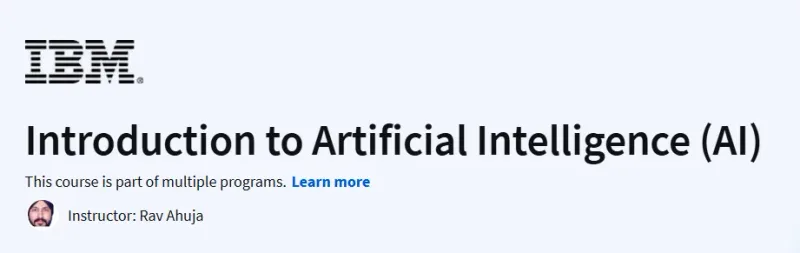
What you will learn in Introduction to Artificial Intelligence (AI) Course
- Gain hands-on experience with tools like spreadsheets, SQL, and R to manipulate and analyze data effectively.
- Learn data cleaning techniques to ensure accuracy and reliability in decision-making.
- Explore exploratory data analysis methods to uncover trends, patterns, and insights.
- Develop data visualization skills using Tableau and ggplot2 to present findings clearly.
- Work on real-world case studies to gain practical problem-solving experience.
- Complete a capstone project, applying data analytics skills to a full-scale project.
Program Overview
Foundations of Data Analytics
⏱️ 4-6 weeks
- Introduction to the data life cycle and its role in decision-making.
- Learn problem-solving and critical thinking skills for analytics.
- Understand data analytics applications across industries.
- Get familiar with tools like spreadsheets, SQL, and visualization software.
Data Cleaning and Preparation
⏱️6-8 weeks
- Learn data structures and databases for efficient data storage.
- Use spreadsheets and SQL to clean and manipulate data.
- Identify common data errors and apply cleaning techniques.
- Ensure data accuracy and consistency for reliable analysis.
Data Analysis with Spreadsheets, SQL, and R
⏱️8-12 weeks
- Perform calculations, filtering, and pivot tables in spreadsheets.
- Write SQL queries to retrieve and manipulate data.
- Use R programming for statistical analysis and visualization.
- Develop data-driven business recommendations.
Data Visualization and Storytelling
⏱️10-12 weeks
- Create visual dashboards using Tableau and spreadsheets.
- Translate complex data into clear insights for stakeholders.
- Develop engaging data narratives to support decision-making.
- Apply best practices for designing effective visuals.
Google Data Analytics Capstone Project
⏱️12-15 weeks
- Work with a dataset to clean, analyze, and visualize insights.
- Present findings using dashboards, reports, and storytelling techniques.
- Apply problem-solving skills to real-world business challenges.
- Earn your Google Data Analytics Professional Certificate upon completion.
Get certificate
Job Outlook
- Projected 25% job growth for data analysts by 2030 (U.S. Bureau of Labor Statistics).
- High demand across industries like finance, healthcare, tech, and e-commerce.
- Entry-level salaries range from $60K – $85K, with experienced analysts earning $90K – $120K+.
- Employers seek expertise in SQL, Python, R, data visualization, and machine learning.
- Certification improves visibility on LinkedIn and job platforms.
- Strong foundation for careers in data analytics, machine learning, and AI.
- High job security and growth potential with trends in big data, cloud computing, and AI adoption.
Explore More Learning Paths
Take your AI and data science expertise to the next level with these hand-picked programs designed to expand your skills and boost your career potential.
Related Courses
-
Introduction to AI Course – Start your journey in artificial intelligence with foundational concepts and practical applications.
-
IBM AI Developer Professional Certificate Course – Gain hands-on experience building AI solutions with real-world projects and tools used by industry professionals.
-
IBM AI Foundations for Business Specialization Course – Learn how AI can transform business processes and drive strategic decisions.
Related Reading
-
What Is Python Used For – Understand why Python is a cornerstone language for AI development and data science applications.