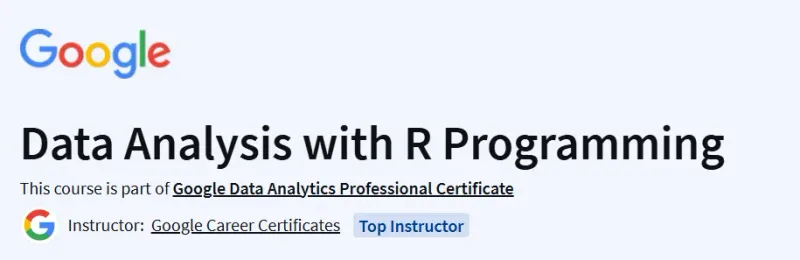
Data Analysis with R Programming Course

Data Analysis with R Programming Course Course

The "Analyze Data to Answer Questions" course offers a comprehensive introduction to data analysis techniques. It's particularly beneficial for individuals seeking to understand and apply data analysi...

Explore This Course
9.8/10 Highly Recommended

Data Analysis with R Programming Course on Coursera — The "Analyze Data to Answer Questions" course offers a comprehensive introduction to data analysis techniques. It's particularly beneficial for individuals seeking to understand and apply data analysis methods in various domains.

Pros

  • Beginner-friendly with no prior experience required.
  • Taught by experienced instructors from Google.
  • Flexible schedule accommodating self-paced learning.
  • Applicable to both technical and non-technical audiences.

Cons

  • Limited focus on advanced data analysis topics; further courses are needed for deeper exploration.
  • Some learners may seek more extensive hands-on projects or real-world datasets.

Data Analysis with R Programming Course Course

Platform: Coursera

What you will learn in Data Analysis with R Programming Course

  • Discuss the importance of organizing your data before analysis by using sorts and filters.

  • Convert and format data for analysis.

  • Apply functions and syntax to create SQL queries to combine data from multiple database tables.
  • Use functions to conduct basic calculations on data in spreadsheets.

Program Overview

 Organize Data for More Effective Analysis
5 hours

  • Learn the importance of organizing data through sorting and filtering in both spreadsheets and SQL.

 Format and Adjust Data
4 hours

  • Explore converting and formatting data, including combining data using SQL queries.

 Aggregate Data for Analysis
8 hours

  • Understand functions, procedures, and syntax involved in combining or aggregating data from multiple sources.​​

Get certificate

Job Outlook

  • Proficiency in data analysis is crucial for roles such as Data Analyst, Business Analyst, and Data Scientist.
  • Skills acquired in this course are applicable across various industries, including technology, healthcare, finance, and more.
  • Completing this course can enhance your qualifications for entry-level data analytics positions.

Explore More Learning Paths

Take your data analysis and programming expertise to the next level with these hand-picked programs designed to expand your skills and sharpen your analytical insights.

Related Courses

Related Reading
Gain deeper insight into data-driven decision-making and analytical frameworks:

  • What Is Data Management? – Explore the principles of managing, organizing, and utilizing data effectively in any organization.
FAQs

Who is this course best for, and what career benefits does it offer?
Perfect for aspiring data analysts, students, or professionals transitioning to data roles who want a solid foundation in R. Builds valuable skills in data cleaning, visualization, and reporting—common needs across analytics roles. Completion earns a shareable Google-backed certificate—great for resumes, LinkedIn, or professional portfolios.
What are the strengths and limitations of this course?
Strengths: Extremely well-received with a 4.8/5 rating from over 11,000 learners. Part of a professionally curated certificate program, grounded in real-world business analytics needs. Limitations: Focuses strictly on R—not broader data science or machine learning tools like Python or advanced R packages. Provides fundamental coverage—does not dive into deeper statistical modeling or domain-specific analytics.
What practical skills and tools will I learn?
You will: Get acquainted with R and RStudio, including variables, data types, functions, vectors, and pipes. Manipulate, clean, analyze, and visualize data using Tidyverse and ggplot2. Create reports using R Markdown for structured, reproducible outputs. Complete 36–37 quizzes and 1–2 hands-on assignments to reinforce learning.
Do I need prior programming or statistical experience?
This is a beginner-level course—no prior R or coding experience is required. It’s part of the Google Data Analytics Professional Certificate, so it's designed for learners starting their data journey.
How long does the course take, and is it self-paced?
Consists of 5 modules in total. Coursera recommends a pace of 3 weeks at about 10 hours per week, totaling ~30 hours. Some listings state 33 hours, aligning with the 3-week guideline Designed to be self-paced, letting you progress at your own convenience.

Similar Courses

Other courses in Data Science Courses